
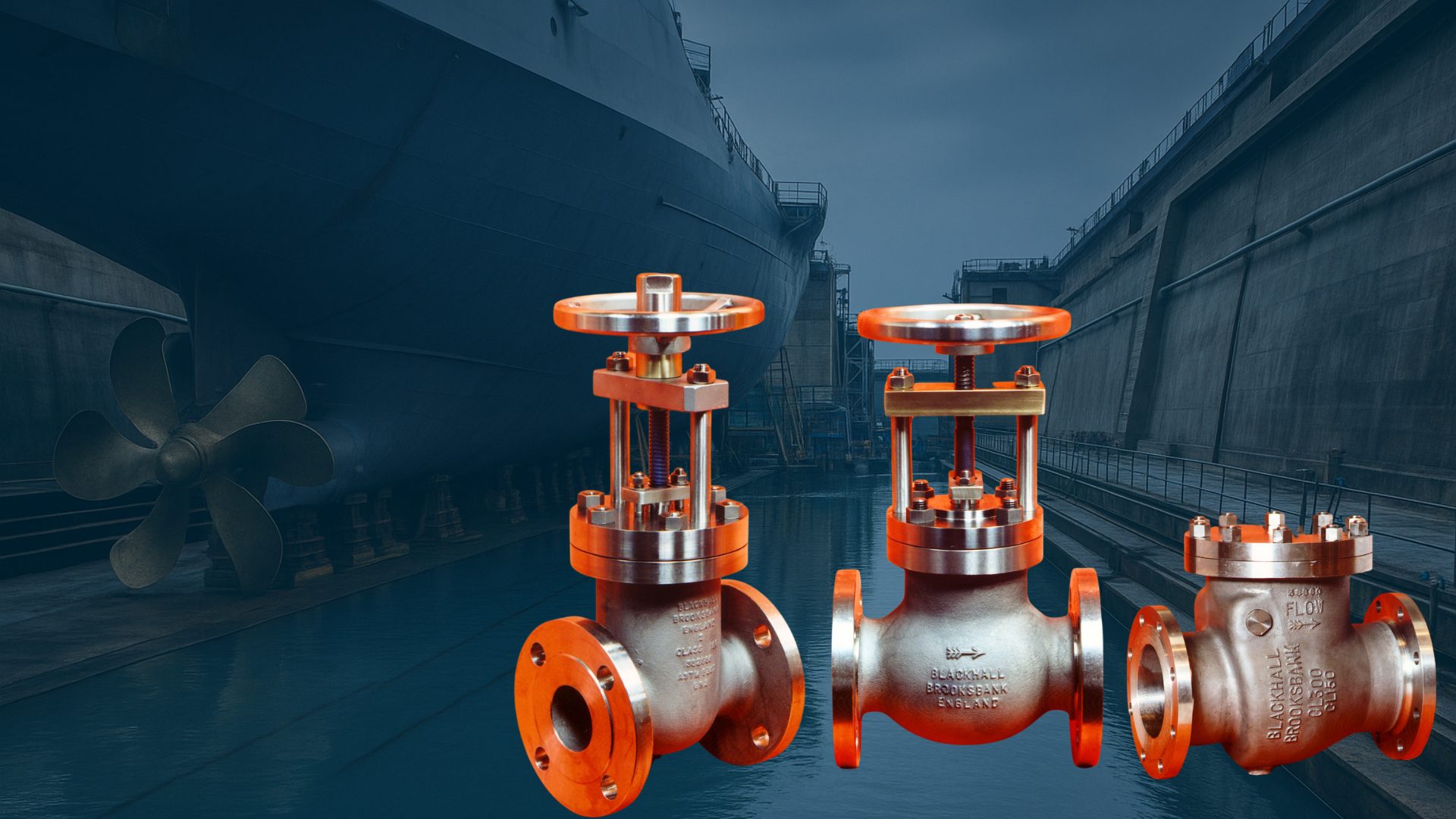
Dry docking is one of the most complex and critical phases in the life cycle of a naval or commercial vessel. It enables detailed inspection, repair, maintenance, and retrofitting of ships, including high-value defence assets like submarines, patrol craft, and support vessels. At the heart of this infrastructure lies an often-underappreciated set of components: valves. These mechanical systems are essential to dry dock operation, ensuring safe, reliable and controllable management of water, fuel, hazardous fluids, and pressurised gases.
In this guide, we’ll break down the essential types of valves used in dry docking, their functional roles, material considerations, and the growing importance of zero-leakage and long-life performance for defence and naval applications.
The Strategic Importance of Valves in Dry Dock Infrastructure
Modern dry docks, especially those used in naval infrastructure – must meet stringent safety, environmental, and operational standards. The valves installed within these systems must:
- Manage vast volumes of seawater during flooding and draining cycles
- Isolate critical systems during vessel servicing
- Control hazardous or environmentally sensitive fluids
- Provide emergency shut-off in case of incident or flooding
Failure of any valve in this setting can result in catastrophic consequences — from flooding and environmental damage to costly delays in military readiness. That’s why naval authorities, engineers, and defence contractors increasingly seek out partners with proven capability, British manufacturing, and long-term performance credentials.
Key Valve Types in Dry Docking Applications
1. Isolation Valves
Primary Function: To enable or prevent flow through key pipelines, including seawater culverts, ballast systems, and dock dewatering networks.
Common valve types include:
- Marine gate valves – suitable for full bore isolation in main lines
- Butterfly valves – compact, quarter-turn operation for space-constrained installations
- Marine globe and globe stop valves – for precision control in mid-size pipelines
Material Considerations: For seawater service, materials like nickel-aluminium bronze (NAB), duplex stainless steels, and specialist anti-corrosive coatings are essential to mitigate galvanic corrosion and extend service life.
2. Control Valves
Primary Function: Regulating flow rate, pressure, and directional control during complex flooding/dewatering operations or fuel transfer within dry dock environments.
These valves are typically actuated (electric or pneumatic) and integrated with the dry dock’s SCADA or control systems. Actuated globe valves are especially useful where variable throttling is required over time.
Blackhall’s marine control valve range includes custom-configured globe valves with precision actuation for long-cycle reliability in damp, high-salinity environments.
3. Check Valves
Primary Function: Preventing reverse flow in pumping and drainage systems, particularly where multiple pumping modes exist.
Check valves must offer quick-closing, low-pressure-drop performance and marine-grade construction. They are particularly critical where seawater discharge systems interface with vessel cooling lines or dock drain systems.
Available in swing, tilting disc, or lift configurations, Blackhall marine check valves can be matched to specific system velocities and pressures.
4. Safety and Hazardous Service Valves
Primary Function: Isolate or contain hazardous fluids during ship maintenance — such as fuel, coolant, radioactive fluids (in nuclear submarines), or waste streams.
Here, zero-emission, bellows-sealed valves are essential. Blackhall’s Shaw range of Eurochlor- and UOP-approved valves offers industry-leading protection for critical defence applications.
Key features include:
- Bellows-sealed isolation to eliminate fugitive emissions
- Material certifications suitable for high-hazard environments
- Proven performance in nuclear and chemical service
These valves are often specified for use in high-security dry docks with nuclear capabilities.
Why Valve Selection Matters in Defence Dry Docks
Dry docks built or refurbished for naval defence purposes must consider:
- Security and readiness – systems must be ready at a moment’s notice
- British manufacturing compliance – aligned with DSIS and MoD preferences
- Longevity and lifecycle value – systems like Blackhall’s valves are designed for decades of service, with full spares and support
In fact, many dock designers now seek manufacturers who offer through-life engineering support, including site surveys, refurbishment, and custom actuation systems.
Future Trends in Naval Dry Dock Valving
Several trends are reshaping the future of valve requirements in dry dock engineering:
- Growth in hydrogen propulsion systems – requiring cryogenic valve handling (Blackhall’s hydrogen and cryogenic ranges address this)
- Increased automation and remote diagnostics – demanding smart actuation and condition monitoring
- Net zero targets – dry dock operators are exploring energy-efficient and refurbished valve solutions
Blackhall’s Renov8 programme supports refurbishment and sustainability goals — especially valuable in MOD and Crown Estate properties where carbon benchmarking is becoming mandatory.
Conclusion: Valves That Protect More Than Just Water
Valves may not be the most visible components in a dry dock, but they’re among the most important. From holding back the sea to protecting lives and vessels during high-stakes naval operations, they are the silent sentinels of engineering integrity.
Blackhall Engineering’s marine and Shaw valve ranges are built to meet the extreme demands of defence infrastructure, with custom engineering, full lifecycle support, and proven British pedigree. Whether you’re designing a new naval facility or upgrading existing dock systems, our team of Valvologists® is here to help.
Get in touch with Blackhall to discuss your dry dock valve requirements, or explore our full product capabilities online.
