
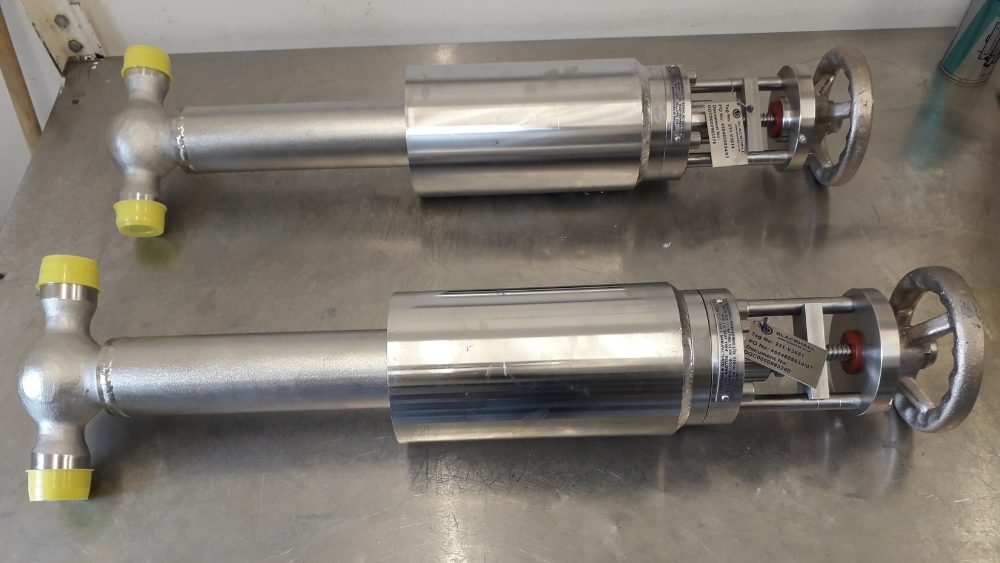
We talked to Blackhall Engineering about their hydrogen project in 2020, where they launched high-pressure bellows-sealed control valves for Air Products in La Porte, Texas, advancing hydrogen distribution and storage solutions.
What were the primary challenges in designing and manufacturing the high-pressure bellows-sealed control valves for hydrogen applications?
Designing and manufacturing control valves for hydrogen applications involves overcoming significant technical challenges due to hydrogen’s unique properties and demanding service conditions. Hydrogen’s small molecular size increases the risk of leakage, requiring the bellows seal to provide an exceptionally tight and durable barrier. These bellows seals must maintain integrity under high pressures and wide temperature ranges without compromising the valve’s functionality. Material selection is critical, as the valve components must resist hydrogen embrittlement, necessitating advanced alloys and coatings. The valve design must balance precise flow control with varying operating conditions. Tight shut-off requirements are crucial for ensuring zero leakage, especially in critical applications, demanding highly reliable sealing mechanisms. Welding techniques are also vital to ensure the integrity and strength of the valve components, requiring precision and expertise to avoid any risk of leaks or failures. Rigorous testing protocols, including non-destructive testing (NDE) and pressure testing, are implemented to verify performance under extreme conditions. Furthermore, the valves must meet strict regulatory and safety standards while remaining cost-effective and scalable for hydrogen infrastructure deployment.
Could you describe the unique features of these control valves that make them particularly suited for hydrogen distribution and storage?
Control valves for hydrogen distribution and storage feature unique design elements that enhance their suitability for these critical applications. These valves are constructed from materials resistant to hydrogen embrittlement and are designed for durability under extreme temperature and pressure conditions. The bellows seal provides a robust, leak-tight barrier, preventing hydrogen leakage and ensuring safety under high-pressure conditions. In addition to bellows, the gland arrangement includes a lantern ring and PTFE packing as a secondary seal. These valves allow for varied trim designs to accommodate precise flow control across different operating conditions, enhancing flexibility in hydrogen systems. The top-end assembly is designed for easy removal without compromising the cold box arrangement, enabling maintenance or replacements. Replaceable seats and trim components further simplify maintenance, reduce downtime, and extend the valve’s service life. Additionally, the valves are compact and electropolished to ensure the thermal efficiency of the system, minimising heat transfer in cryogenic conditions. The valves can also be designed with vacuum cuffs or jackets to integrate seamlessly with cold box and insulation jackets, maintaining optimal thermal performance. This modular, service-friendly design ensures reliability, efficiency, and adaptability, making them ideal for hydrogen storage and distribution networks.
How did Blackhall Engineering collaborate with Air Products to ensure the valves met the specific needs of the La Porte, Texas facility?
Blackhall Engineering has been supplying valves to Air Products for many decades, fostering a strong and trusted relationship. For the La Porte, Texas facility, Blackhall’s design team collaborated closely with Air Products to ensure the valves were designed to meet the specific project requirements. Multiple project meetings were held throughout the design process to ensure the valves were correctly designed for the service conditions, and the integral vacuum cuffs were specifically designed to ensure seamless integration with the coldbox. Several design changes arose during the design cycle, which Blackhall effectively managed without compromising functionality or longevity of these valves. Blackhall’s expertise and proactive approach ensured the delivery of reliable, high-quality valves tailored to the facility’s needs.
What role do these control valves play in enhancing the safety and efficiency of hydrogen distribution?
These control valves play a critical role in enhancing the efficiency and safety of hydrogen distribution by providing precise flow control and robust sealing to prevent leakage. The bellows seal ensures a leak-tight barrier, minimising the risk of hydrogen escaping even under high pressure and extreme temperatures. Their modular design, with replaceable seats and trim components, allows for easy maintenance and reduces system downtime, ensuring continuous and reliable operation. The ability to vary trims supports optimal flow management across different operating conditions, improving system efficiency. Additionally, the valves’ high structural integrity and compatibility with cryogenic environments maintain the safety and stability of hydrogen storage and distribution systems, contributing to the overall reliability of hydrogen infrastructure.
Can you discuss the material selection process for these valves, considering the challenges hydrogen presents?
The material selection process for these control valves was crucial due to the unique challenges hydrogen presents, such as its small molecular size, high permeability, and risk of hydrogen embrittlement. Materials were selected to resist embrittlement and fatigue caused by hydrogen infiltration under high pressure and cryogenic temperatures. Advanced alloys, such as stainless steel and nickel-based materials, were chosen for their strength, ductility, and resistance to cracking in hydrogen-rich environments. The bellows and sealing components were made from materials with exceptional flexibility and leak-tight properties, ensuring reliable operation. Special coatings and surface treatments were applied to enhance durability and minimise wear. All selected materials were rigorously tested to confirm compatibility with hydrogen and to meet safety and performance standards, ensuring the valves operate effectively and safely over their lifespan.
How does Blackhall’s bellows-sealed technology prevent hydrogen leakage and extend valve life?
Blackhall has been using bellows in their cryogenic and zero-emission valves for many decades, developing deep expertise in this area through years of research and testing. This extensive experience has enabled Blackhall to design and manufacture bellows-sealed top-end assemblies that effectively prevent hydrogen leakage and ensure safety. The bellows are made from stainless steel 316 sheets, which are non-destructively tested (NDE) before forming bellows to ensure the material’s integrity. These multi-ply bellows are specifically designed to withstand the required number of cycles, ensuring durability and long-term performance in demanding hydrogen applications. Additionally, each bellow and the top-end assembly are leak-tested to ensure they meet strict leakage criteria, providing an extra layer of assurance against hydrogen escape. This combination of expertise, advanced materials, and thorough testing ensures both the safety and longevity of the valves, even in high-pressure and cryogenic conditions.
What testing and certification processes did the valves undergo before deployment in the hydrogen facility?
The valves underwent rigorous testing processes to ensure their functionality, reliability, safety, and compliance with specifications and industry standards. The valves were subject to extensive leak testing, including testing of the body, bellows, and top-end assembly to confirm they met strict leakage criteria, ensuring no hydrogen escape. Material integrity was verified through non-destructive testing (NDE) to prevent issues like hydrogen embrittlement. Welding examinations, along with LPI (Liquid Penetrant Inspection) and PMI (Positive Material Identification) techniques, were employed to confirm compliance of materials and ensure welds met stringent quality standards. Cleanliness checks and dimensional inspections were also performed to ensure all components met the required specifications and were free from contaminants that could affect valve performance. Seat leakage was tested to comply with CLASS VI requirements. The valves were subjected to pressure tests to confirm their durability and performance. Additionally, each valve was functionally tested concerning actuators and positioners to ensure proper operation and control. All testing was conducted in accordance with relevant safety and performance standards, and certifications were obtained to ensure the valves were fully compliant with industry regulations before being deployed in the facility.
How has this project impacted Blackhall Engineering’s approach to hydrogen solutions and innovation in the sector?
This project has significantly impacted Blackhall Engineering’s approach to hydrogen solutions and innovation in the sector. As an expert in cryogenic valve technology since 1965, Blackhall has long been a leader in designing and manufacturing valves for demanding applications, including hydrogen distribution and storage. This project provided an opportunity to refine our design philosophy, incorporating changeable trim designs, extractable top-end assemblies, and advanced seal designs. These innovations have enhanced the flexibility, maintainability, and performance of our valves. Given the large scale of this project, with its high-pressure rating and substantial quantity of valves required, we have invested in strengthening our supply chain to ensure we can meet the complex demands of hydrogen applications while maintaining the highest standards of reliability and safety. Our close collaboration with Air Products has further deepened our understanding of the evolving needs in the hydrogen sector, ensuring we continue to deliver cutting-edge, reliable solutions that contribute to the growth of sustainable energy infrastructure.
What future advancements in hydrogen valve technology does Blackhall envision, based on the insights gained from this project?
Blackhall envisions several future advancements in hydrogen valve technology aimed at further improving performance, reliability, and efficiency in hydrogen distribution and storage. One key area of focus is the continued development of advanced sealing technologies, particularly to enhance leak-tightness beyond CLASS VI and to address emerging challenges in hydrogen applications. We also see opportunities in optimising valve designs for even greater flexibility, with features like fully customisable trim configurations and modular components, allowing for easier maintenance and adaptation to varying operational conditions. Additionally, we are exploring the use of advanced materials that offer superior resistance to hydrogen embrittlement, improving valve longevity in high-pressure and cryogenic environments. Blackhall is also focused on increasing automation and digitalisation within our valve solutions, integrating smart sensors for real-time monitoring and predictive maintenance capabilities. These advancements will help ensure that our valves continue to meet the evolving needs of the hydrogen sector, supporting the growth of sustainable energy infrastructure while maintaining the highest standards of safety and performance.
