
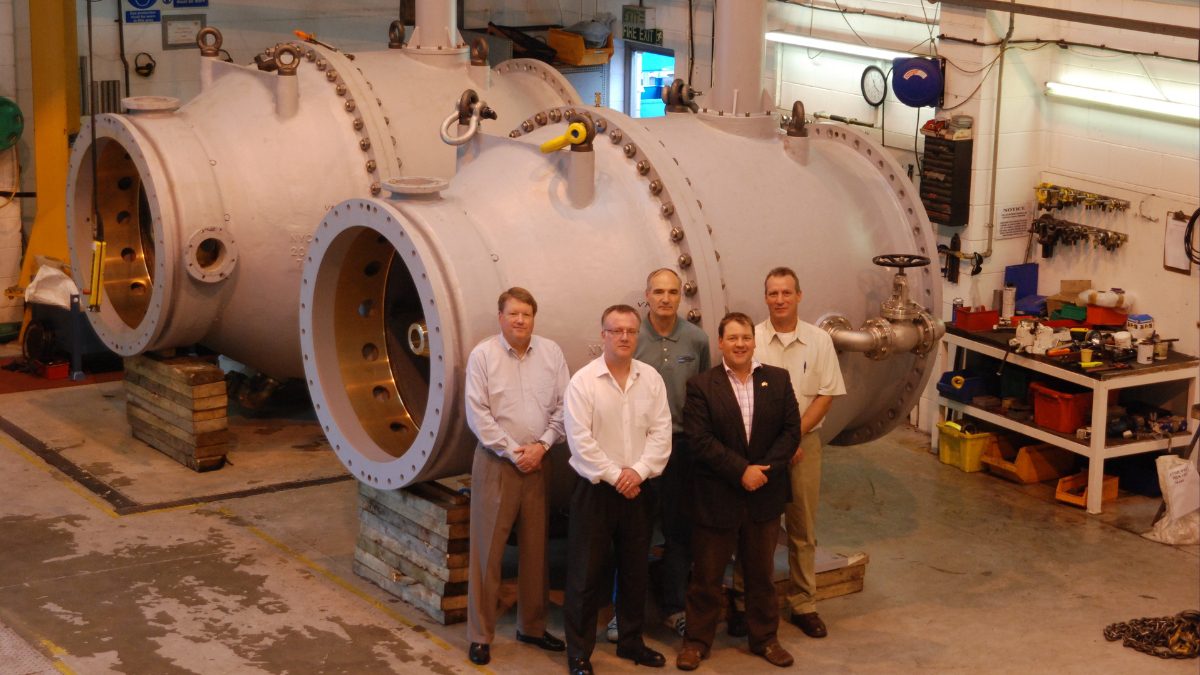
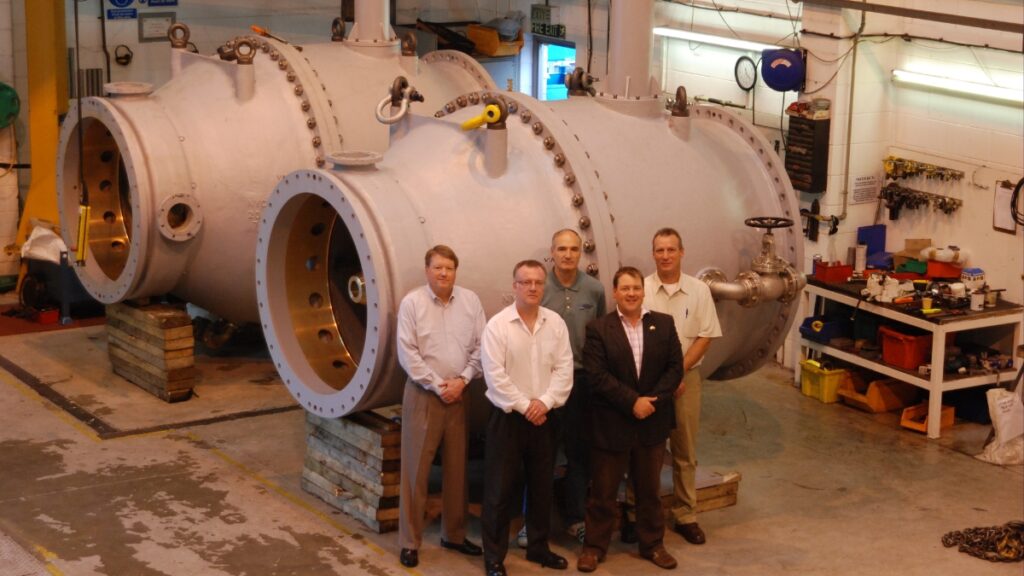
100 Year Project
For any city, water is its lifeblood; it could be catastrophic if it dries out. Not many of the local New York population would have heard about Larner-Johnson® valve’s significant contribution in the growth and sustainability of the city of New York.
And yet it has played a remarkable part in 20th Century American history, helping to ensure the city is a world leader in almost every regard. New York City’s population of 8.5 million makes it one of the most densely populated cities in the US. Add to that an estimated 55 million visitors every year and you can appreciate why supplying water to the city is a daily challenge for the New York City Water Board.
In 1909, New York was much smaller with a population of 3.5 million but still America’s biggest city. Ensuring their ever-growing population had clean and running water, they placed their trust in Larner-Johnson® Flow Control Valves, a decision that paid off for an entire century.
Since 1909, the outflow of the water from this reservoir has been controlled by the Larner-Johnson® Flow Control Valves. After an impressive service life spanning 98 years, the city’s water board decided to replace them. The original valves were developed by expert engineers from Blakeborough, in the heart of Brighouse, England by the world’s finest designers and engineers using the latest techniques and processes available at the time.
Aware that the original valve design (Larner-Johnson®) was still in manufacture by UK-based Blackhall Engineering, who acquired the manufacturing rights in 1989, the New York board’s choice was clear: either replace with a valve designed over a hundred years ago or consider newer designs that lacked the impressive track record of the Larner-Johnson® Flow Control Valve.
Why the Larner-Johnson® Valve Was Chosen Again
Blackhall had been making continuous improvements to the manufacture of the Larner-Johnson®, not only by embracing the leading technologies but also using the latest in materials and analytical software including CFDA, FEA and seismic analysis, improving its original lifespan without compromising on its incomparable operating efficiency.
One can’t argue about Blackhall’s Larner-Johnson® Flow Control Valve’s incomparable lifespan. The innovative feature of the Larner-Johnson® type plunger valve is its pilot-operated design. This design permits the flow control valve to utilise the flow line pressure for moving the plunger on the guide rails, ultimately requiring substantially lower torques for achieving the seal. Since the plunger is moved very gradually and gently using the line pressure, it becomes possible to implement a stainless steel metal-to-metal seal which is highly resistant to wear and tear hence promising an extraordinary lifespan of more than 50 years without any service or maintenance requirements.
The New York board realised the complex external operating systems of the alternative flow control valves, which are not pilot-operated and hence didn’t qualify for a metal-to-metal seal but a metal-to-rubber seal. They were susceptible to a number of problems that would reduce the capacity and the life of the valves the number one priority for the scheme. Other considerations included:
- No change to the flow characteristics by using the same valve
- No costly pipe modifications
- Low torque requirements
- A proven safety record and longevity
When all factors were taken into account, there could only be one choice to ensure the continued successful water supply to 60% of New York City: the Blackhall Larner-Johnson® Flow Control Valve.
55 million Tourists & 8.5 million Residents Rely on our Flow Control Valves
Custom Engineering and Seamless Integration
Using our fluent innovation and latest technology, we manufactured these bespoke mammoth-sized valves that would not only function better but also slot into the old valve’s space without affecting the original infrastructure hence avoiding any costly modifications.
In 2009, the expert Blackhall team successfully installed the Larner-Johnson® Flow Control Valves, replacing the old valves which had proven the test of time, 98 years to control the outflow of the Ashokan Reservoir to 60% of New York City.