
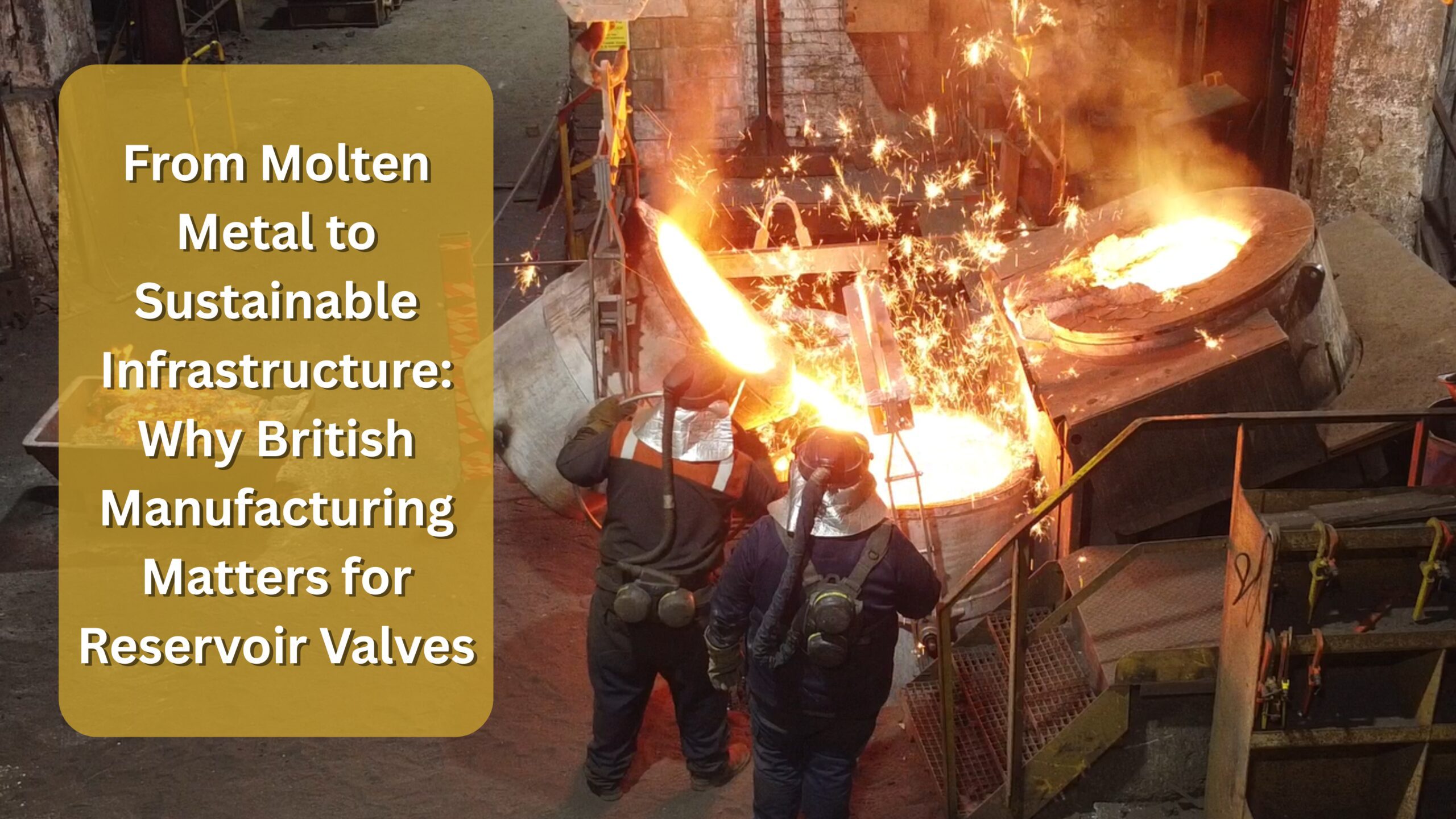
There is a moment in the life of every valve that defines everything that follows. Molten metal is poured, shaped, and set into form. It is the beginning of a component that will go on to control water, protect infrastructure, and operate unseen for decades.
But today, that moment represents something bigger than manufacturing. It reflects a growing shift in the UK water industry towards sustainability, resilience, and smarter infrastructure decisions.
Under AMP8, the question is no longer just what does this asset cost? It is increasingly where does it come from, and what is its long-term impact?
A Changing Landscape Under AMP8
The UK water sector is entering one of its most significant investment periods to date. With billions allocated to improving infrastructure, reducing leakage, and meeting environmental targets, expectations have fundamentally changed.
Regulators such as Ofwat are placing increasing emphasis on:
- Whole life cost rather than upfront price
- Carbon reduction across the supply chain
- Long-term asset performance and resilience
This shift is driving a more considered approach to procurement. Infrastructure is no longer judged purely on installation, but on how it performs over decades and what impact it has along the way.
And that is where manufacturing strategy becomes critical.
From Foundry to Field: Selset Reservoir
The footage captured recently tells a very real story. The casting being poured is not theoretical or abstract. It is for a valve that will be installed at Selset Reservoir in County Durham.
What makes this even more significant is where it begins. The casting is being poured at a foundry in Scunthorpe, reinforcing a fully UK-based journey from origin to installation.
This connection matters. It shows a clear, traceable path from British manufacturing to British infrastructure, with no disconnect between where the valve is made and where it will ultimately perform.
Why Where It’s Made Now Matters
Over time, many supply chains across engineering sectors have become global. It is now common for components to be sourced, cast, machined, and assembled across multiple countries before reaching site.
While this model offers flexibility, it also introduces distance. Distance in logistics, in accountability, and increasingly, in carbon.
In contrast, manufacturing closer to home offers a different set of advantages:
- Reduced transport emissions
- Greater visibility and control
- Stronger collaboration between design, manufacturing, and installation
- Faster response when projects demand it
For critical infrastructure such as dams and reservoirs, these factors are not secondary. They directly influence risk, reliability, and long-term performance.
Blackhall’s approach reflects this thinking. By maintaining an integrated UK-based manufacturing model, continuity is preserved across the entire process. From the earliest stages through to delivery, there is a clear and consistent line of ownership.
It is not the most common route in today’s market, but it is one that aligns closely with the direction the industry is heading.
A Smarter Approach to Carbon Reduction
One of the defining themes of AMP8 is carbon.
While operational efficiency remains important, there is increasing scrutiny on embodied carbon, the emissions generated before an asset even becomes operational. This includes manufacturing, transport, and installation.
Supply chains play a major role here.
A valve that travels thousands of miles before installation carries a very different carbon footprint compared to one produced locally. Multiply that across large infrastructure programmes, and the impact becomes significant.
This is where local manufacturing becomes more than a logistical choice. It becomes a sustainability strategy.
By keeping production within the UK, transport distances are reduced and supply chains are simplified. When combined with products designed for long-term use, the environmental benefits compound over time.
In simple terms, fewer replacements and shorter supply chains lead to lower carbon.
This aligns directly with the expectations placed on water companies under AMP8, where reducing environmental impact is no longer optional. It is a requirement.
Supporting a More Resilient UK Supply Chain
Beyond carbon, there is another important consideration. Resilience.
Recent global disruptions have highlighted the risks associated with extended supply chains. Delays, shortages, and limited visibility can all impact project timelines and costs.
In contrast, a strong domestic supply chain offers stability.
By working within a UK-based manufacturing network, Blackhall supports a wider ecosystem of engineering capability. Foundries, machinists, and specialists remain active, skilled, and accessible.
For customers, this translates into:
- Greater certainty in delivery
- Easier access to technical support
- A supply chain that is aligned with local standards and expectations
It is a quieter advantage, but one that becomes increasingly valuable in large, long-term infrastructure programmes.
Engineering That Reflects Long-Term Thinking
Reservoir and dam infrastructure is built to last. In many cases, assets remain in service for decades, even centuries.
This changes the way components must be approached.
Valves are not short-term installations. They are long-term assets embedded within systems where access is limited and replacement is complex. The decisions made at the point of specification have consequences that extend far into the future.
This is why the industry is moving towards total expenditure models. It is no longer just about what something costs today, but what it will cost over its lifetime.
Blackhall’s approach is aligned with this mindset. By focusing on durability, serviceability, and consistent manufacturing standards, the aim is to reduce the need for intervention and support stable, long-term operation.
It is a practical response to the realities of water infrastructure, where doing things once, and doing them properly, delivers the greatest value.
People Still Make the Difference
While manufacturing strategy and sustainability are key themes, there is another factor that remains just as important. People.
Engineering expertise, built over years of experience, continues to play a central role in delivering reliable solutions. At Blackhall, this is embodied in the concept of the valvologists, engineers who understand not just how valves are designed, but how they behave in real-world conditions.
By keeping manufacturing and engineering closely connected, this expertise remains embedded within the process. Feedback loops are shorter, decisions are better informed, and improvements can be implemented quickly.
It is this combination of knowledge and proximity that allows for a more responsive and intelligent approach to manufacturing.
Conclusion
The journey from molten metal to a functioning reservoir valve is shaped by a series of decisions. Decisions about design, manufacturing, and ultimately, responsibility.
In today’s water industry, those decisions are being re-evaluated. Sustainability, resilience, and long-term value are now central to how infrastructure is specified and delivered.
By maintaining an integrated UK-based manufacturing approach, Blackhall Engineering offers a model that aligns naturally with these priorities. It supports lower carbon outcomes, strengthens supply chains, and provides the level of control required for critical infrastructure.
As AMP8 progresses, the importance of these factors will only increase.
Because in the end, where something is made is not just a detail. It is part of how it performs, how long it lasts, and how it contributes to a more sustainable future.