
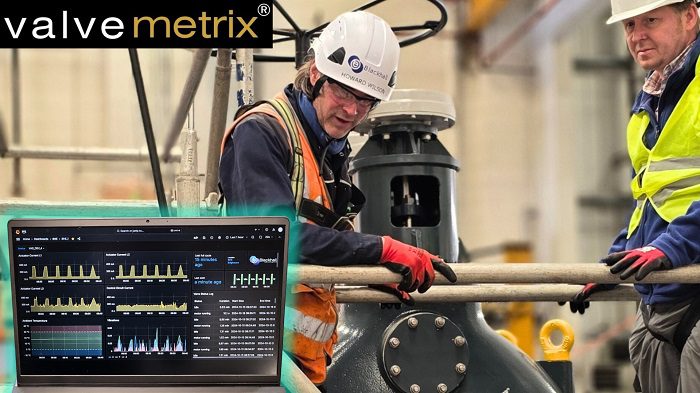
Predicting failure in large-scale valve systems before it happens, is no longer a speculative ambition. It’s a practical, deployable, and commercially validated reality. At the heart of this revolution is ValveMetrix®—a digital condition monitoring system built specifically for high-value, long-life valve assets in dam, reservoir, hydropower, and industrial water systems.
This article explores exactly how ValveMetrix® works, the technical principles behind its predictive capabilities, and how it is transforming the way Supervising Engineers, Digital Transformation Leads, and Operators prevent catastrophic valve failures, optimise TOTEX, and comply with PR24 resilience goals.
ValveMetrix® in Context: Why Dam and Reservoir Valves Are a Special Case
Valves in dam and reservoir systems are not your everyday valves. They are massive, often submerged, and embedded deep within complex legacy infrastructure. Many have been in place for 50–100 years and are critical to public safety.
Failures—whether in scour valves, draw-off systems, or high-pressure gates—can mean uncontrolled releases, massive flooding, or total loss of drawdown capability. These events are not only regulatory violations but also serious public safety risks.
This is why Blackhall developed ValveMetrix®: a way to digitally retrofit these valves with smart sensors, giving operators live visibility into structural integrity and mechanical performance—without needing costly excavation or disassembly.
What ValveMetrix® Measures: The Anatomy of Predictive Monitoring
ValveMetrix® leverages a modular sensor suite connected to an intelligent analytics engine. The sensors are chosen based on valve type, location, and operational risk profile, and can include:
- Torque Sensors: Mounted on handwheel or actuator shafts, they detect changes in torque required to operate the valve—a key sign of obstruction, galling, or stem corrosion.
- Vibration Sensor: Installed externally, these monitor minute changes in vibration patterns that can indicate misalignment, bearing wear, or hydrodynamic imbalance.
- Strain Gauges: Placed on the valve body or bonnet to detect stress from internal pressure fluctuations or mechanical deformation.
- Pressure Sensors: Inline sensors that measure differential pressure across the valve to infer flow rate, obstruction, or cavitation.
- Position Encoder Sensor: These monitor stem or actuator travel to detect partial closure, seating issues, or jamming—especially critical for gate and globe valves in dams.
- Temperature Sensors: Useful particularly for cryogenic and steam valve applications to monitor thermal cycling fatigue.
From Raw Data to Insights: The Role of Tech and Threshold Parameters
Collecting sensor data is the easy part. The true value lies in interpreting it—accurately and in real time. This is where valvologists built tech engine comes into play. The platform uses anomaly detection algorithms, trained on decades of historical valve failure data, to define threshold parameters and flag deviations.
Here are examples of how these parameters help predict specific failure modes:
- Torque Rise Over Time (TROT): An upward drift in torque over successive operations often indicates stem corrosion or lubricant degradation. For example, a 15% increase over baseline within 6 cycles might trigger a predictive maintenance alert.
- Vibration Spectral Shift: A change in the dominant frequency band from 60Hz to 75Hz in vibration signals on a bonnet-mounted accelerometer may indicate seat wear or cavitation damage. Thresholds are set dynamically, based on ambient conditions and operational profile.
- Position Deviation on Closure: A 3–5mm discrepancy between expected and actual stem position at full closure—detected via encoders—can suggest stem-thread damage or foreign body obstruction, which, if left unaddressed, could lead to seizure under load.
- Strain Fatigue Curve Mapping: Strain gauge data plotted over time allows for early detection of creep or material deformation, especially in old iron castings. Exceeding 60% of elastic limit strain for >10 cycles may indicate impending crack formation.
Each of these thresholds is calibrated using ValveMetrix’s adaptive learning engine. It doesn’t just apply one-size-fits-all rules. Instead, it builds a digital fingerprint of each individual valve and updates it dynamically based on observed behaviour.
In effect, your valve becomes its own digital twin—telling you exactly when it needs attention.
Case Snapshot: Reservoir Safety Averted by Predictive Closure Resistance Flag
During a recent installation at a 1920s-era dam, ValveMetrix® detected a gradual increase in stem torque resistance on a draw-off valve. The change was slight—just a 9% increase over three months—but consistent.
Rather than wait for it to seize, the supervising engineer flagged it for proactive inspection. Upon dismantling, operators found an internal stem guide had fractured—just days away from a total mechanical lock-up. Thanks to early detection, the part was replaced in situ, avoiding a full dewatering and excavation.
Estimated savings: £220,000 and 6 weeks of downtime.
Seamless Integration: SCADA, VAMP® & Digital Twin Ecosystems
ValveMetrix® isn’t a standalone—it’s designed to be part of a broader asset intelligence framework. It integrates effortlessly into existing SCADA platforms, This is critical in dam and reservoir systems, where real-time hydraulic modelling relies on accurate flow, pressure, and operational valve status inputs. With ValveMetrix® feeding live condition data into your SCADA dashboards, you can:
- Forecast drawdown scenarios more precisely
- Automate lockout/tagout during unsafe valve conditions
- Generate inspection schedules based on usage and wear trends, not calendar dates
Onboarding and Deployment: Making Legacy Smart Without Excavation
One of the standout features of ValveMetrix® is that you don’t have to dismantle your valve or drain your reservoir to install it. This is especially valuable for embedded or buried assets such as DN1800 wedge gates or plunger control valves with long stems.
Regulatory, Sustainability & Strategic Impacts
With Ofwat’s PR24 outcomes driving unprecedented accountability around leakage, resilience, and carbon reduction, ValveMetrix® directly supports several core compliance priorities:
- Resilience: Predictive failure detection avoids emergency drawdowns and ensures valves remain mission-capable for critical event response.
- Carbon: By extending asset life and avoiding over-engineered replacements, ValveMetrix® supports the low-carbon ambitions of Blackhall’s Renov8 refurbishment programme.
- TOTEX optimisation: Condition-based strategies avoid unnecessary interventions and align with AMP8’s emphasis on efficiency.
Combined with tools like BOFIN™ for safe internal inspections and WACHS freeing-up devices, ValveMetrix® empowers site teams to meet compliance targets without compromising safety or budgets.
Training & Cultural Shift: Supporting Operators and Trainees
ValveMetrix® is not just for analysts. Its UI is designed to be intuitive enough for operators and trainees. During training at the valveacademy®, operators learn how to interpret the data visually, using colour-coded status indicators and waveform alerts.
Critical anomalies automatically trigger safety interlocks, while non-urgent issues are logged and categorised with maintenance recommendations. The goal is to empower your field staff with digital awareness—without overwhelming them with noise.
Looking Ahead: Next-Gen Intelligence for a Century of Reliability
As Blackhall moves into its next century of innovation, ValveMetrix® will continue to evolve. Upcoming releases include:
- AI-powered failure mode classification: Automatically distinguish between seat erosion, stem galling, or pressure transients.
- Hydraulic modelling integration: Feed live valve behaviour into site-wide hydraulic simulations in real time.
- Digital passports: Each valve will carry its own digital service and performance record, securely stored and transferable between asset owners or contractors.
Ultimately, we are not just building monitoring tools. We are redefining what a valve is. Through ValveMetrix®, every Blackhall valve becomes an intelligent node in a living, breathing infrastructure network—engineered for longevity, safety, and insight.
Conclusion: The Future of Valve Maintenance Is Predictive, Not Preventive
ValveMetrix® isn’t an add-on. It’s a philosophy in action: Valvology® 2.0, where the wisdom of engineering tradition meets the intelligence of data science. For engineers across dam safety, water utilities, power generation, and hydrogen infrastructure, the question is no longer \”Can we afford this?\”—but rather, \”How much longer can we afford not to?\”
To learn more or book a live demonstration with one of our valvologists®, contact us
Smart monitoring. Intelligent decisions. Zero surprises.